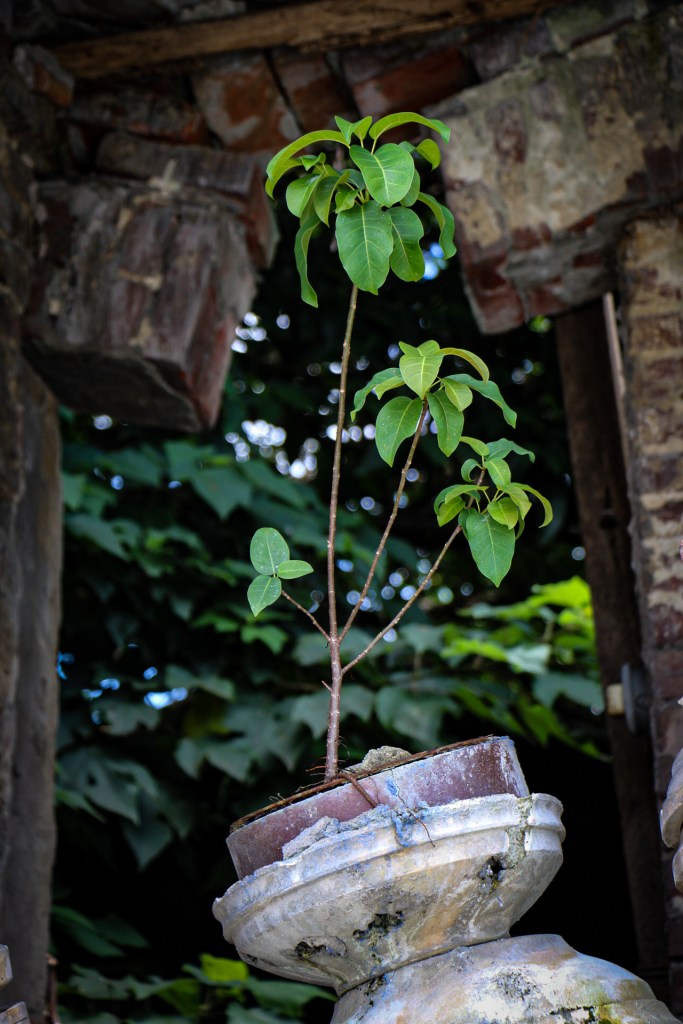
Life, uh, finds a way.
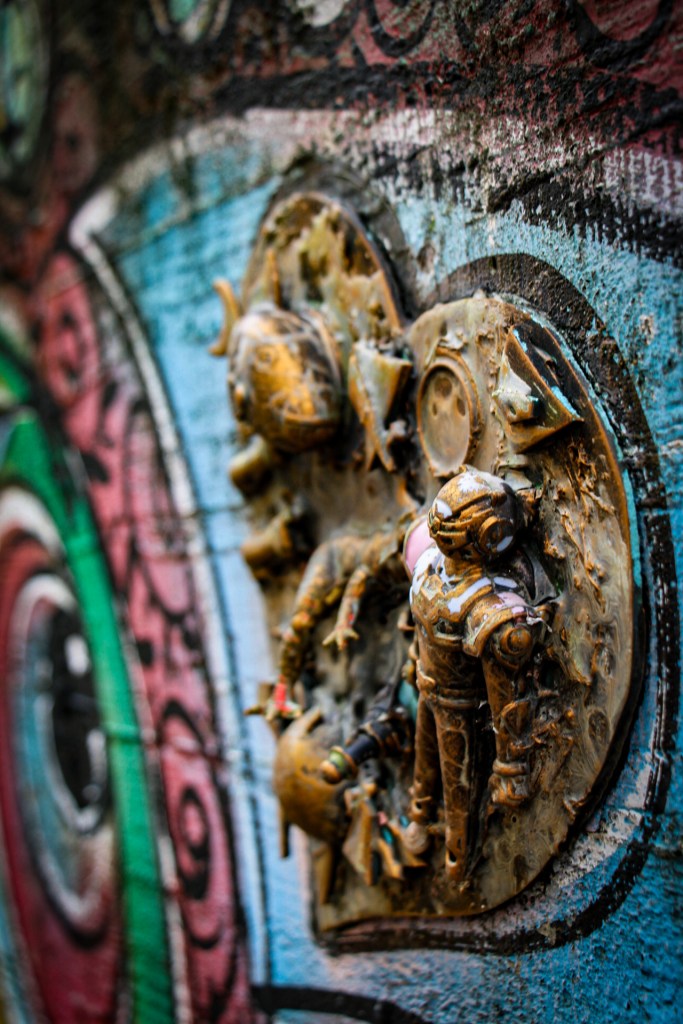
Once meant to be played with, now immortalized as part of the town itself.

Such a cute doggo, I hope it lived a sweet and happy life 🙂
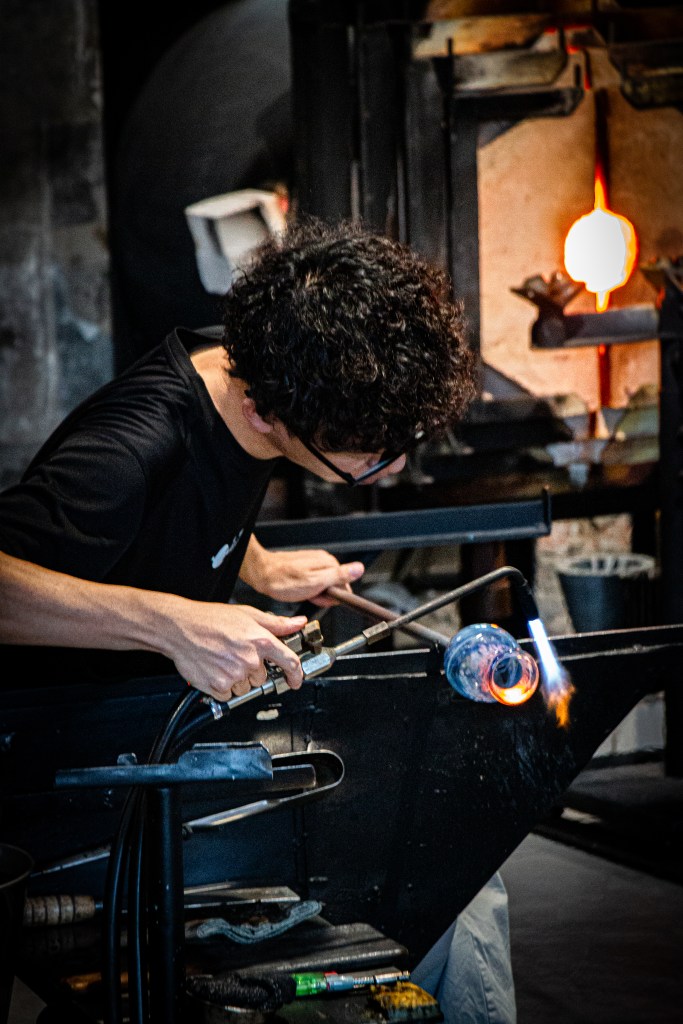
In a town celebrated for its ceramics, a glassblowing workshop felt oddly out of place. I wasn’t expecting it, but it is definitely on my list for next time.

I think this little one just realized I was taking a photo of it.
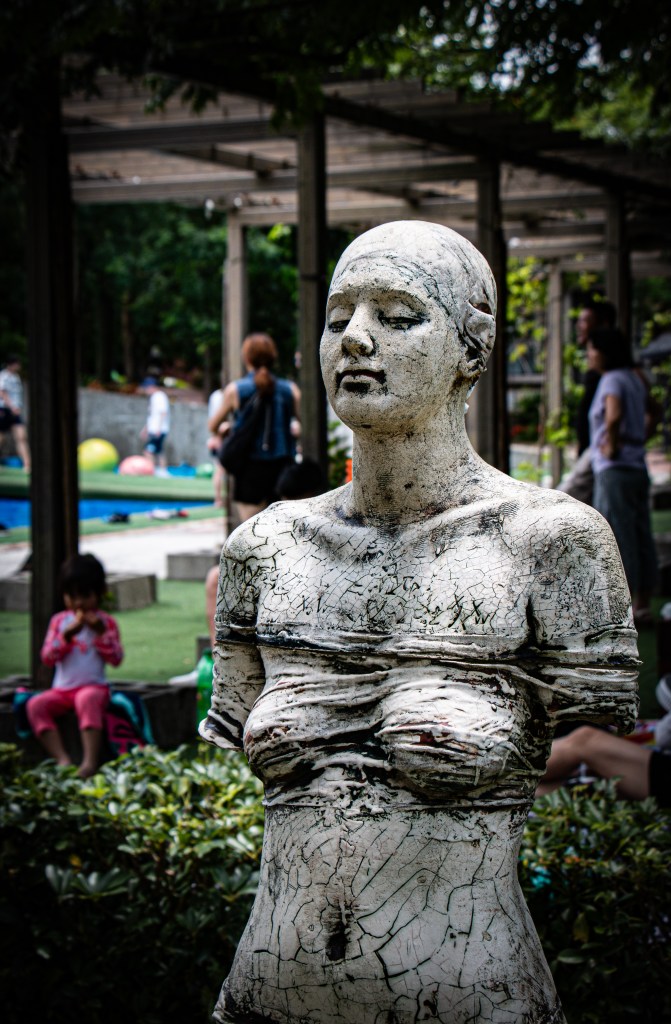
陰陽 Ying Yang
艾琳娜‧艾琳凱 Arina Ailincai
作品暗喻人類被物質主義驅動下的虛境,透過靈性的自我覺醒和物質安適之間的關係,在這樣的拉扯拔河中為了尋求人性的平衡而努力。透過操作陶土的內部與外部的對話,不按常理地重組身體的組件,陶土表面紋理的處理,產生了藝術的語彙。
This work explores the void people drive themselves into with materialism and the effort to reach a balance between spiritual enlightenment and material affluence. The artist created a conversation between the internal and external sides of clay, rearranged body parts, and added surface patterns to the clay, thus enriching the word of artistic expressions.
Source: New Taipei City Yingge Ceramics Museum
Maybe the real yin and yang is the contrast between the statue’s bare, cracked, broken form and the carefree joy of the children playing behind it.
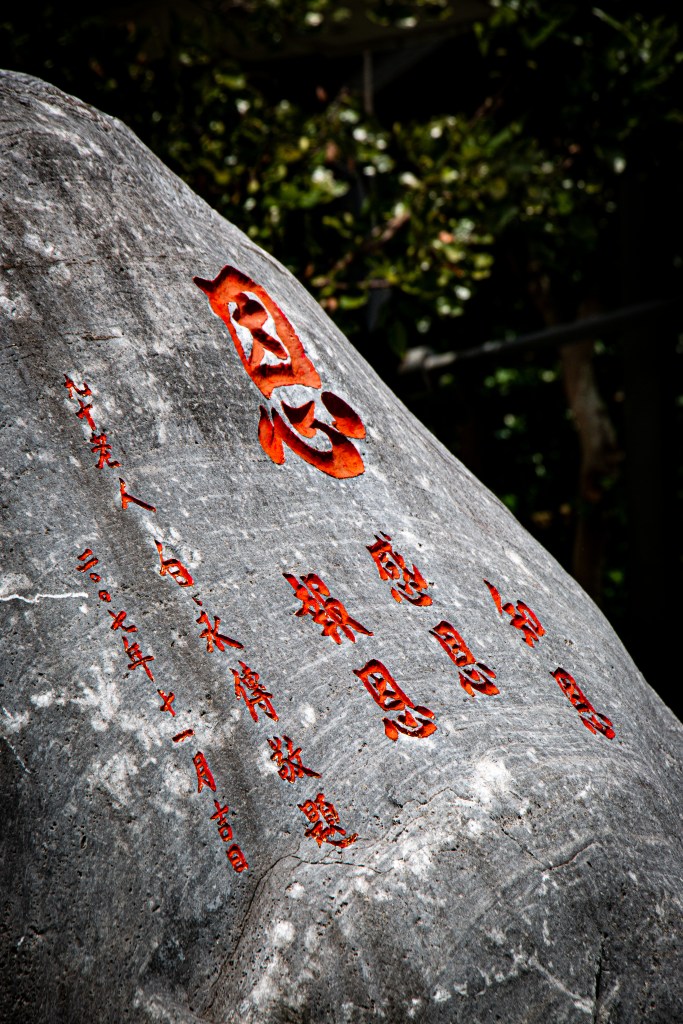
“On is in all its uses a load, an indebtedness, a burden, which one carries as best one may.”
“‘One never returns one ten-thousandth of an on.’ It is a heavy burden and ‘the power of the on‘ is regarded as always rightly overriding one’s mere personal preferences.”
“The passivity of a street crowd in Japan when an accident occurs is not just lack of initiative. It is a recognition that any non-official interference would make the recipient wear an on.”
Benedict, R. (1946: 99, 103, 104).
Debtor to the ages and the world was the first piece I read as a student of Anthropology and it shall forever live rent-free in my head(?) heart(?). Despite the somewhat overgeneralizing nature of Benedict’s analysis of on, her account initially appeared convincing until I recalled that Georg Simmel had also sought to explain the same phenomenon of urban indifference, albeit in a different cultural context. Whereas Benedict understood it through the moral economy of on, Simmel attributed it to the blasé attitude, a rational barrier of cultivated indifference that urban dwellers develop to protect themselves from the stimuli and rapid pace of urban life.
Both illuminate aspects of urban indifference, yet both fall short of accounting for its exceptions. They are not mutually exclusive, yet neither are they entirely complementary. Each is embedded in the cultural context from which it was conceived. Perhaps this is less a limitation of either perspective than a reminder that no single framework can fully account for the complexity and contradictions of people’s lived experience. And this is precisely why I fell in love with Anthropology.
References:
- Benedict, R. (1946). Debtor to the ages and the world. In The chrysanthemum and the sword: Patterns of Japanese culture. Houghton Mifflin.
- Simmel, G. (1903). “The Metropolis and Mental Life”. Blackwell Publishing.
- Thorpe, C., Yuill, C., Hobbs, M., Todd, M., Tomley, S., & Weeks, M. (2015). The sociology book. DK Publishing.

The culturistic fallacy is a dangerous trap, lurking in the blurred space between cultural relativism and moral relativism. On a few occasions, I have come across texts on the stigmatization of menstruation. Herdt (1982), for example, describes how the Sambia regard menstrual blood as a form of pollution that threatens male vitality and manhood. This belief underpins the separation of men and women in everyday life, as well as a series of purification rituals that transitions boys into manhood by symbolically ridding them of female pollution.
Understanding the cultural context behind stigmatization doesn’t absolve us from questioning the harm they can inflict. This museum is a refreshing reminder that education and open conversations are among the most effective ways to dismantle the stigma, or at the very least, remind the stigmatized that they are not alone.
The dialogue wall (which I somehow forgot to photograph) was the highlight for me. It brought together voices from places such as Japan and the Netherlands, with each contributor reflecting on their cultural understanding of menstruation and their experience of the museum.
References:
- Cronk, L. (1999). Gardening tips. In That complex whole: Culture and the evolution of human behavior. Routledge.
- Herdt, H. (1982). Rituals of manhood: Male initiation in Papua New Guinea. University of California Press.
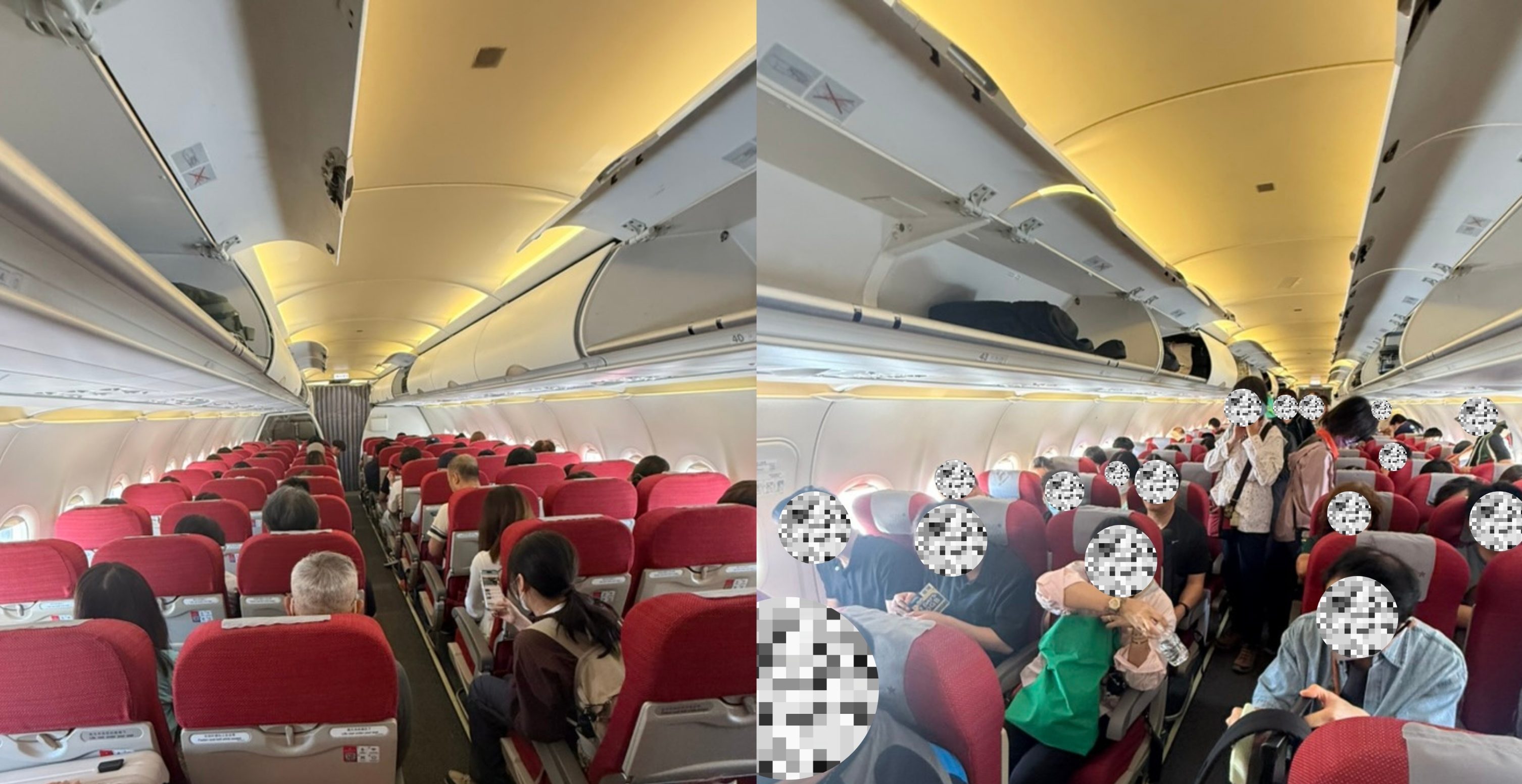
While taxiing to the arrival gate, I found myself on the fault line of a breaching experiment.
Behind me, everyone was already on their feet wrestling bags out of their overhead compartments, nothing out of the ordinary. But in front of me? Absolute stillness. Nobody stood up. Nobody was fighting to grab their bags. Although upon closer examination of the photo, two overhead compartments had indeed been opened. Nevertheless, the contrast genuinely made me very uneasy. I felt splited between two completely different sets of unspoken social rules.
In the end, I grabbed my bag… and sat back down. Somehow, it felt like it was the only way for me to belong to both worlds. I kept waiting for the two worlds to converge, but they never did. The invisible boundary held right up until the cabin door opened.
Reference:
- Garfinkel, H. (1967). Studies in ethnomethodology. Prentice-Hall.


Leave a Reply